Executive Summary:
Under Vision 2030 and the National Transport and Logistics Strategy (NTLS), Saudi Arabia is leveraging its geographical position at the crossroads of Asia, Europe, and Africa to become a leading global logistics hub. While billions of dollars are transforming ports, rail networks, and economic zones, Digital Freight Matching (DFM) acts as the critical software layer—using AI and real-time algorithms to connect shippers directly with truck carriers. DFM accelerates Vision 2030 by reducing empty backhaul miles by up to 30%, maximizing existing road infrastructure, lowering logistics costs, and supporting KSA’s goal to raise the transport sector’s GDP contribution from 6% to 10%.
How Is Saudi Arabia Transforming into a Global Logistics Hub?
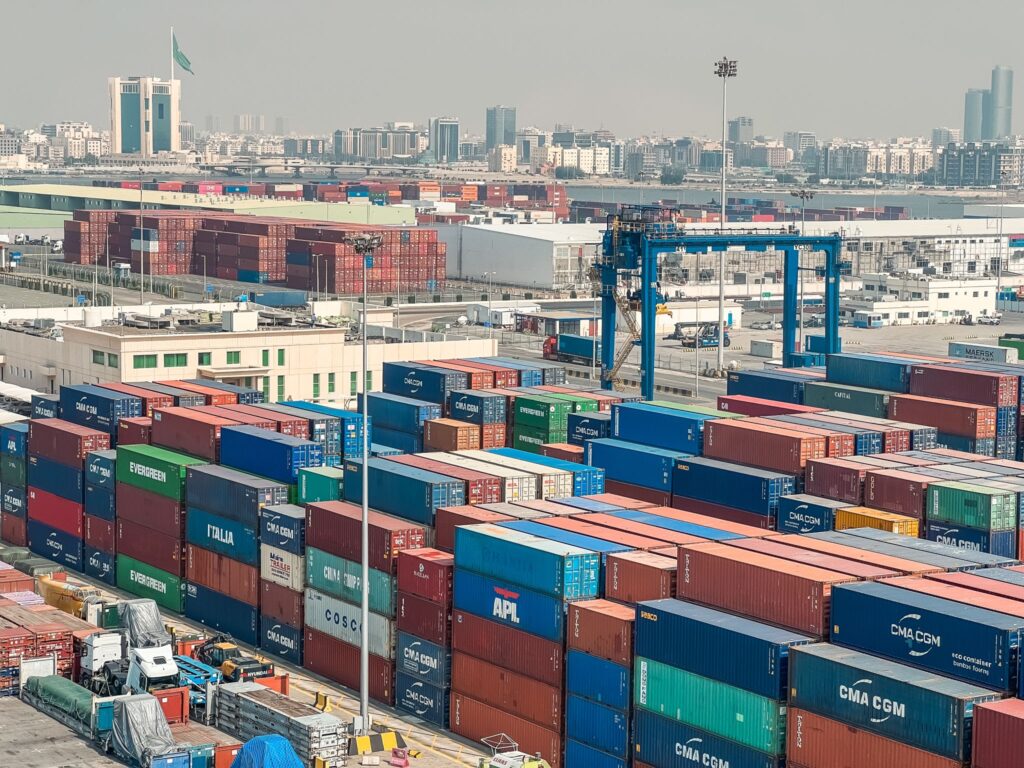
Saudi Arabia sits directly along the trade route connecting Asia and Europe, with nearly 13% of global seaborne trade passing through the Red Sea. To convert this geographic position into operational economic power, the Kingdom launched the National Transport and Logistics Strategy (NTLS) under Vision 2030, committing over $133 billion in capital investments.
The physical overhaul is massive:
- Expanding Logistics Zones: Constructing 59 integrated logistics zones across the Kingdom to streamline distribution.
- Boosting Maritime Capacity: Increasing annual port container throughput to 40 million TEUs.
- Upgrading Rail and Air Infrastructure: Building the 8,000+ km Saudi Landbridge rail network and expanding air cargo capacity to 4.5 million tonnes annually.
- LPI Advancement: Propelling Saudi Arabia into the Top 10 of the World Bank Logistics Performance Index (LPI).
However, physical highways, railways, and ports alone cannot achieve these goals. Maximizing this infrastructure requires a digital layer that moves cargo seamlessly across the country—and that is where Digital Freight Matching comes in.
What Is Digital Freight Matching and How Does It Function?
Digital Freight Matching (DFM) is an automated, cloud-based logistics solution that uses artificial intelligence, machine learning, and GPS tracking to instantly pair shippers needing cargo transport with available freight carriers.
Historically, road freight in the region relied on fragmented networks of manual brokers, phone calls, paper bills of lading, and long wait times at loading docks. DFM platforms replace this friction with an “Uber-like” experience for commercial trucking:
- Automated Dynamic Matching: Shippers post load requirements; algorithms match the optimal truck based on location, vehicle type, and capacity.
- Transparent Algorithmic Pricing: Market rates are determined dynamically based on demand, distance, and fuel, eliminating broker markups.
- End-to-End Visibility: Real-time telematics track shipments from pickup to delivery.

How Does Digital Freight Matching Directly Support Vision 2030’s Infrastructure Goals?
Digital freight platforms serve as the digital engine driving Saudi Arabia’s physical supply chain transformation across five core infrastructure goals:
1. How Does DFM Eliminate “Deadhead” (Empty) Truck Miles?
One of the largest inefficiencies in road freight is deadheading—trucks returning empty after dropping off a delivery. In traditional networks, up to 40% of truck journeys operate without cargo, wasting fuel, clogging highways, and accelerating road wear.
DFM algorithms analyze regional trade flows (e.g., Jeddah to Riyadh) and automatically schedule backhaul loads for drivers before they complete their primary delivery. This reduces empty runs to under 15%, increasing fleet utility without putting a single additional truck on the road.
2. How Does DFM Support Saudi Arabia’s 24-Hour Customs Clearance Target?
Under the NTLS, Saudi Customs (ZATCA) and the Saudi Ports Authority (Mawani) have compressed container clearance times from over 5 days down toward a 24-hour benchmark.
Physical port clearance is useless if trucks aren’t lined up to pull containers out immediately. DFM platforms integrate with national trade portals like Logisti to pre-schedule drayage trucks, matching incoming port containers with inland carriers before the vessel even docks. This prevents port congestion and keeps inland freight moving continuously.
3. How Does Digital Freight Matching Boost Economic Efficiency for SMEs?
Small and medium-sized enterprises (SMEs) make up the majority of Saudi Arabia’s trucking and manufacturing sectors. Digital freight platforms democratize access to the supply chain:
- For Small Fleet Owners: Independent truck drivers gain direct access to enterprise shipments without paying steep intermediary commissions.
- For Shippers: Manufacturers reduce logistics spend by 15% to 20%, reallocating capital toward core business expansion.
4. How Does Digital Logistics Align with Net-Zero and Sustainability Goals?
Saudi Arabia’s target of reaching Net-Zero emissions by 2060 relies heavily on decarbonizing transport. Transportation accounts for a significant portion of national carbon output. By optimizing routes, reducing engine idling, and eliminating unnecessary empty trips, digital freight matching directly lowers fuel consumption and carbon emissions per ton-kilometer moved.
How Do Traditional Operations Compare to DFM-Enabled Logistics?
| Logistics Operational Metric | Traditional Freight Operations | DFM-Enabled Operations | Vision 2030 Target Alignment |
| Empty Backhaul Miles | 30% to 40% of trips | Reduced to under 15% | Lower fuel burn & highway wear |
| Fleet Capacity Utilization | ~50% average efficiency | 80%+ via intelligent load pooling | Maximizes existing road networks |
| Booking Lead Time | 24 to 48 hours via brokers | Under 15 minutes automated | Faster supply chain velocity |
| Port & Warehouse Dwell | Multi-day delays | Synchronized 24-hr movement | Supports top 10 LPI ranking goal |
| Supply Chain Visibility | Manual phone calls / paper | Live GPS & automated milestone alerts | Enables data-driven commerce |
What Strategic Impact Will Digital Logistics Have on Saudi Arabia’s Future Economy?
Digital freight matching is no longer just a convenient tool for freight brokers; it is a vital pillar of Saudi Arabia’s national infrastructure strategy. As the Kingdom invests hundreds of billions into physical assets—ranging from special economic zones along the Red Sea to transcontinental rail corridors—digital freight platforms provide the intelligence needed to run these networks at peak performance.
By fusing world-class physical infrastructure with AI-driven digital logistics, Saudi Arabia is well on its way to securing its position as the premier logistics gateway connecting Asia, Europe, and Africa.
Top 5 Frequently Asked Questions (FAQs)
1. What is Saudi Vision 2030’s primary objective for the logistics sector?
The main objective under Vision 2030 and the National Transport and Logistics Strategy (NTLS) is to transform Saudi Arabia into a top-10 global logistics hub connecting three continents. The strategy aims to increase the sector’s GDP contribution from 6% to 10%, establish 59 logistics zones, expand rail and air cargo networks, and compress border clearance to 24 hours.
2. How does Digital Freight Matching (DFM) reduce logistics costs in Saudi Arabia?
DFM platforms eliminate middleman broker markups by connecting shippers directly with truck carriers. They also use predictive algorithms to eliminate empty backhaul trips (“deadheading”), lowering operational overhead for carriers and cutting transport rates for shippers by 15% to 20%.
3. What role does digital freight software play in port clearance and drayage?
Digital freight platforms integrate with national customs and port management systems (such as Logisti). This allows carriers to pre-book and coordinate truck arrivals based on precise container discharge schedules, supporting KSA’s goal of 24-hour customs clearance and preventing port container congestion.
4. How does digital freight matching support Saudi Arabia’s green initiative?
By optimizing truck routes, minimizing vehicle idling at ports or warehouses, and preventing trucks from driving back empty after deliveries, DFM drastically reduces total fuel consumption and greenhouse gas emissions across the Kingdom’s road network.
5. Which government platforms oversee digital logistics transformation in KSA?
The Ministry of Transport and Logistics Services (MOTLS), the Saudi Ports Authority (Mawani), ZATCA (Customs), and the Digital Government Authority work together to digitize KSA logistics. Key national digital initiatives include the unified Logisti platform, which centralizes regulatory licensing, transport data, and supply chain management across the country.